


Few could have predicted how completely that 1995 launch would reshape modern tractor design.
Today, three decades later, continuously variable transmissions are seen across nearly every major tractor brand, but the original remains synonymous with Fendt itself.
Picture this – Agritechnica 1995. A watershed moment for the entire agricultural machinery sector. The World Meets Vario. On the Fendt stand sat a tractor that looked futuristic even by modern standards – the Fendt Favorit 926 Vario. Powered by a MAN six-cylinder engine and equipped with the new ML 200 stepless transmission, it became the world’s first large-scale production tractor with a continuously variable transmission.
The industry reaction was immediate. Crowds packed the Fendt stand. Competitors who had dismissed the idea suddenly realised the future had arrived. Trade journalists described it as one of the biggest breakthroughs in modern tractor engineering and they were right – it absolutely was.
Unrelenting determination
The roots of the Vario concept stretch back long before the 1990s, however. By the time the technology was ready for the public, it had already survived thousands of hours of rigorous field trials. Engineers within Fendt had been exploring hydrostatic and power-split transmission concepts as far back as the 1950s. The ambition was simple in theory but immensely difficult in practice – a transmission that could combine the efficiency of mechanical drive with the flexibility of hydraulics. The end goal was to create a tractor that could accelerate smoothly from standstill to top speed without traditional gear changes.
At the time, tractors still relied on manual ranges, powershift boxes, or partially synchronised transmissions. Operators constantly shifted gears to match engine load and field conditions. It worked, but it was never seamless.
Fendt engineer Hans Marschall became one of the key figures behind the early development work. Initial hydrostatic concepts showed promise, but they struggled with efficiency and durability under heavy agricultural loads. By the late 1960s, several ideas had been shelved because the technology simply was not ready. Yet the dream remained alive inside Marktoberdorf under the visionary leadership of Hans-Hermann Fendt.
Before the public ever saw a Vario tractor, Fendt conducted extensive private testing. One of the earliest major field trials took place secretly in the Favorit 600 Series chassis away from prying eyes in the Czech Republic. Engineers wanted to know whether a continuously variable tractor could survive real-world agricultural punishment – they did more than that with prototypes proving something remarkable.
Fuel efficiency improved because the engine could stay in its optimal power band, operators experienced smoother driving and productivity increased because the tractor adapted more easily to changing loads. The power-split design ensured that as speed increased, the mechanical portion of the drive became more dominant, maintaining high efficiency levels that pure hydrostatic drives could never reach.
Evolution
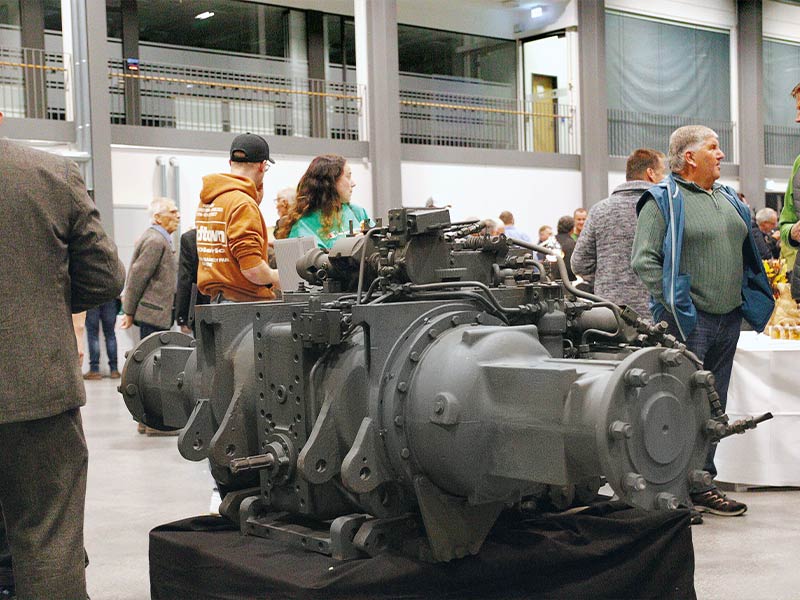
Today it is difficult to imagine how radical this was in 1995. Enthusiasts still speak about the first-generation 926 with almost mythical admiration. Across farming communities and enthusiast forums, the sound and feel of the original 900 Vario Series remains legendary.
In the years following its debut, the Vario transmission underwent continuous refinement and expansion across the Fendt tractor range. The late 1990s saw Vario spread into the 700 Series and 400 Series mid-range utility tractors and by 2009, Fendt had converted its entire tractor lineup to Vario transmissions, abandoning traditional synchronised gearboxes altogether. That achievement was virtually unique within the industry maintaining Fendt’s reputation as an industry leader.
A tractor of the people
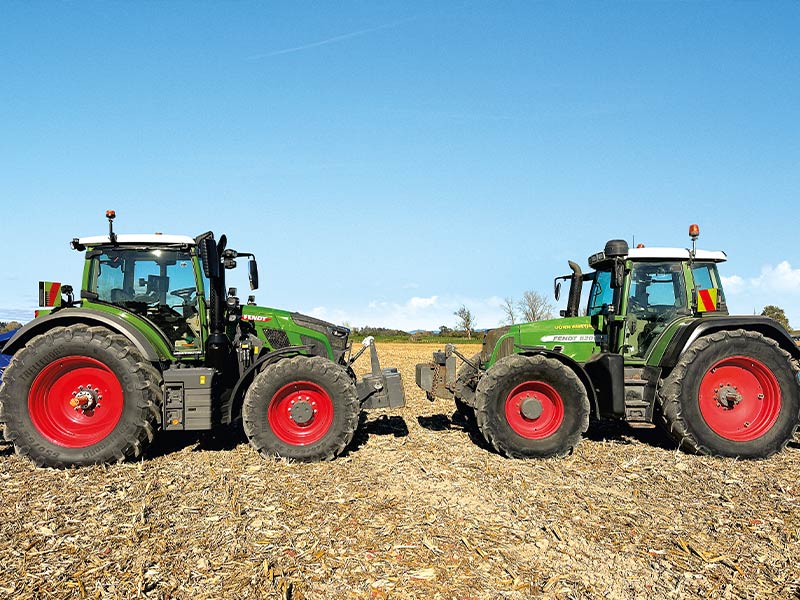
Of the ‘original’ Vario machines launched in 2006, the 820 became a ‘cult classic’ in Europe and beyond. It was the ultimate power-to-weight champion. Compact enough for nimble yard work but packing 205hp for heavy tillage. Its integration of the Tractor Management System allowed the tractor to automatically control engine speed and transmission ratio, ensuring the most economical operation possible. These features helped it to the peak of 50% of the contractor tractor market share in Europe during its 2006-2012 production run and for many, the 820 remains the gold standard of what a multi-purpose tractor should be.
Modern era
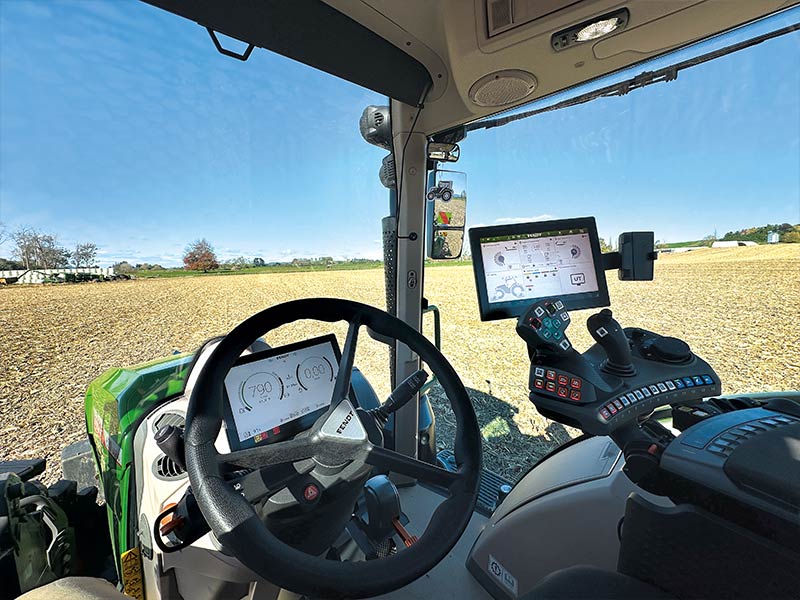
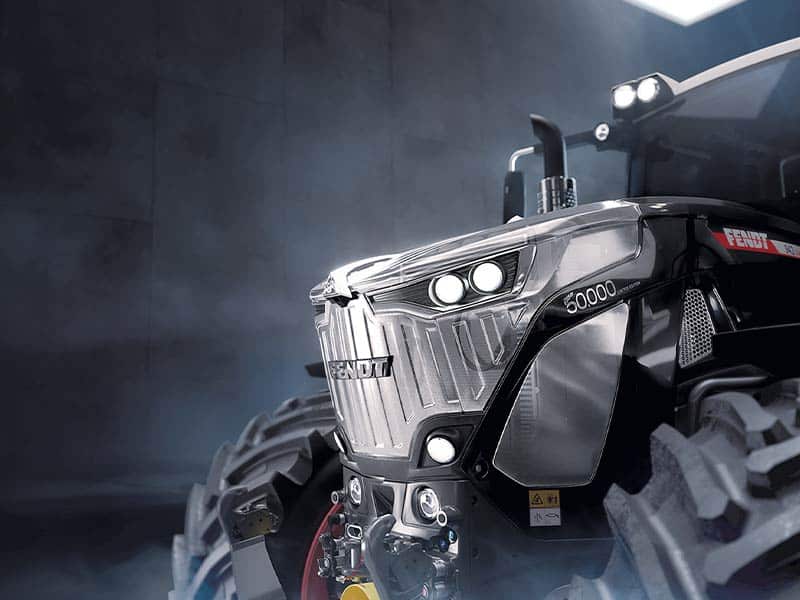
As Fendt celebrates three decades of Vario innovation, the introduction of the new 600 Series is a fitting tribute to the transmission’s enduring legacy. Not only does it boast the latest advancements in VarioDrive technology, but it also revives the ‘600’ nomenclature, paying homage to those original Favorit 600s that carried the first prototype transmissions decades ago. It also shares remarkable similarities in stature, carrying capacity and power to weight ratio to the legendary 820. From a clandestine project in a Favorit 600 to the intelligent VarioDrive systems of 2026, Fendt’s journey has been defined by a refusal to settle for the ‘near enough is good enough’ mindset.
Unlike the original systems that had a fixed ratio between the front and rear axles, VarioDrive, pioneered on the 1000 Series, drives the front and rear axles independently. This eliminates ‘tension’ in the drivetrain meaning no lag and unnecessary fuel usage but also allows the tractor to ‘pull’ itself into corners, significantly reducing the turning circle with no scuffing – extraordinary.
Vario and now VarioDrive have changed how tractors are driven, how power is managed and what operators expected from modern machinery. These transmissions are a symbol of premium engineering and operator-focused design.
Summary
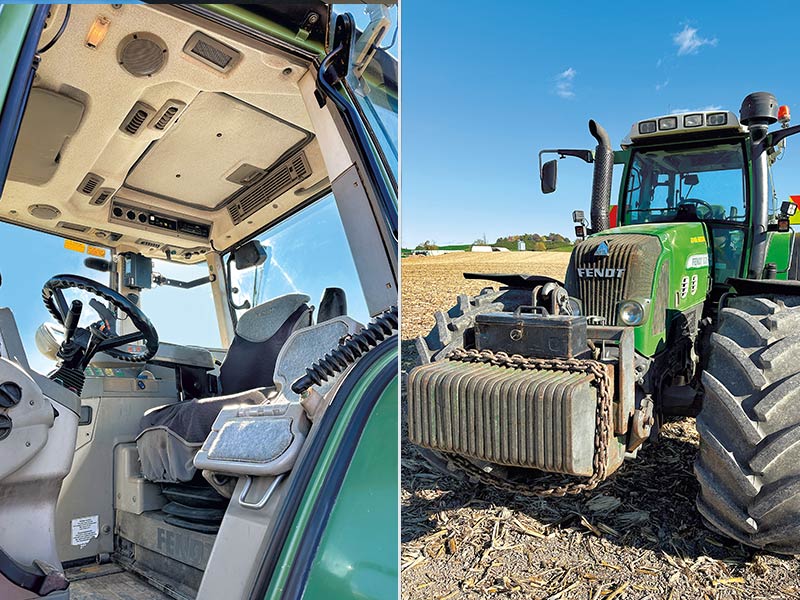
Right: At 20,000 hours, this 820 has been phenomenally reliable
The story of Vario is not simply the story of a gearbox. It is the story of engineering stubbornness, of daring experimentation, and of a company willing to challenge the accepted limits of agricultural machinery. From secret prototype testing to the legendary 926 Vario debut at Agritechnica 1995, the iconic 820 to the modern VarioDrive era, the Vario transmission has become one of the defining technologies in farming history.
Thirty years later, the original idea still feels remarkably modern and while the tractors themselves have evolved dramatically, the spirit behind Vario has remained unchanged. Put simply, it is pure unadulterated innovation without compromise.
