


A 2500km outback run in Massey Ferguson’s 9S.425, powered by biodiesel and HVO, and the case for turning Western Australia’s canola into local renewable fuel
There are road trips, and then there are road trips. When Massey Ferguson released its largest production tractor, the flagship 9S.425 we were itching to get our hands on it but the usual routine of hammering around a local paddock just wasn’t going to cut it. We needed a proper test. Something epic!
So, what did we do? We pointed that massive, striking red bonnet out of Perth, locked the Dyna-VT transmission into eco-mode, and embarked on a gruelling 2500km odyssey across the sun-baked expanses of Western Australia. The mission? To see how AGCO’s premier high-horsepower heavyweight handles the harsh Aussie Outback while running entirely on renewable fuel.
Three Tanks, Zero Fossils
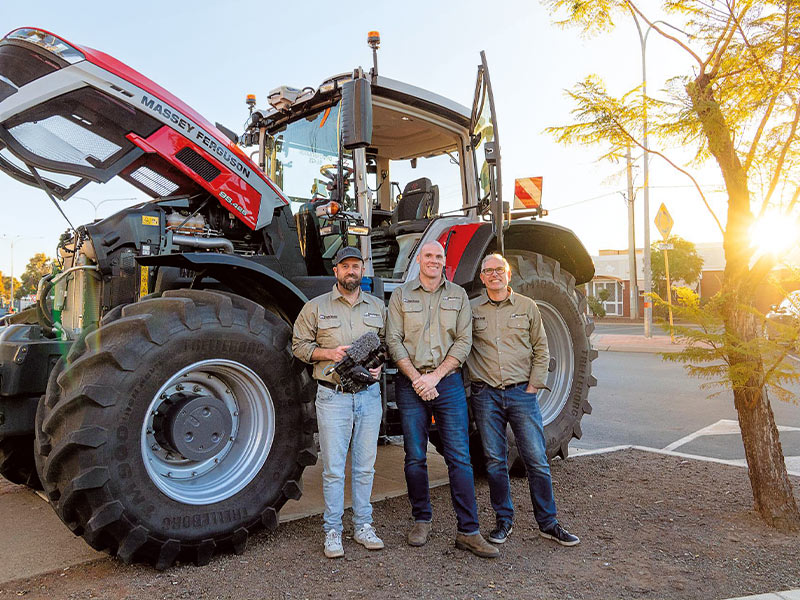
To prove a point about the future of liquid fuels in agriculture, we ditched fossil diesel completely (well, sort of). Instead, we mapped out a punishing loop starting in Perth, heading east out to the mining heartland of Kalgoorlie, sweeping south to the coastal winds of Esperance, tracking across to Albany, and finally charging back up the highway via Bunbury.
To conquer the varied terrain, from corrugated red dirt to heavy undulating transport hauls, we relied on a three-tank biofuel strategy:
Tank 1 (Perth to Kalgoorlie): B20 Biodiesel – A solid, high-blend introduction that mixes conventional diesel with 20% biodiesel, proving that standard agricultural engines can take high-blend renewable mixes in stride without breaking a sweat.
Tank 2 (Kalgoorlie to Esperance via the Goldfields): HVO100 (Hydrotreated Vegetable Oil) – Pure, paraffinic renewable diesel. This stuff is the holy grail for drop-in replacements, offering a massive reduction in greenhouse gases while matching diesel punch litre-for-litre. It’s actually made from recycled vegetable oil (from restaurants) and tallow (a byproduct of animal rendering). In this instance, keep eating the fish and chips people, you’re single handedly saving the planet.
Tank 3 (Mount Barker to Albany and up to Bunbury): B5 Biodiesel – A lighter, universally accessible blend rounding out our coastal and heavy-soil stretch back to the west coast.
The Bigger Picture
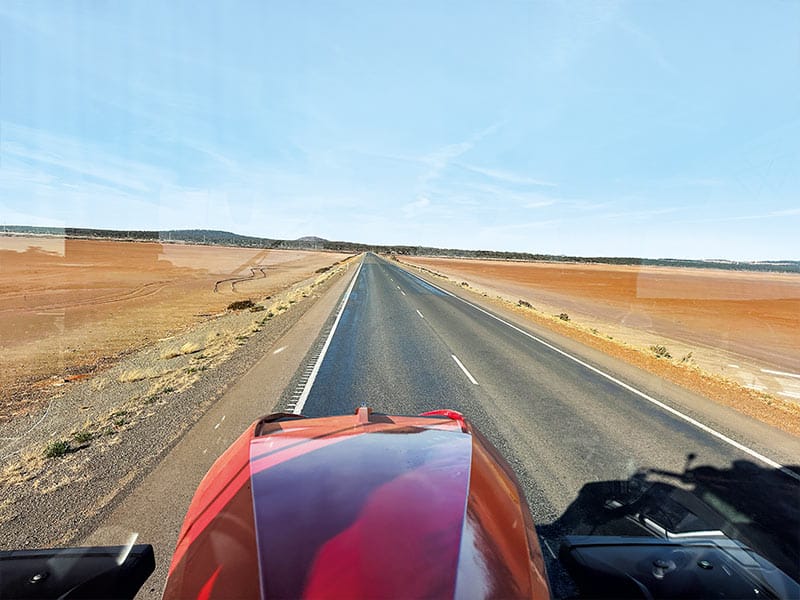
Agriculture is one industry caught in a paradox. We are simultaneously the industry most vulnerable to climate volatility and one of the hardest to electrify. You can’t park a 425hp tractor running heavy tillage implements on a battery charger for four hours in the middle of a tight sowing or harvesting window.
Aviation, mining, heavy transport and agriculture all need high-density liquid energy, but is the social licence for everyone to pump ancient carbon out of the ground running out? Renewable fuels like HVO and biodiesel are the ultimate bridge and frankly, the destination for high-horsepower farming, mining and heavy transport (sustainable aviation fluid or SAF is slightly more complex).
Western Australia’s Secret Weapon: Canola
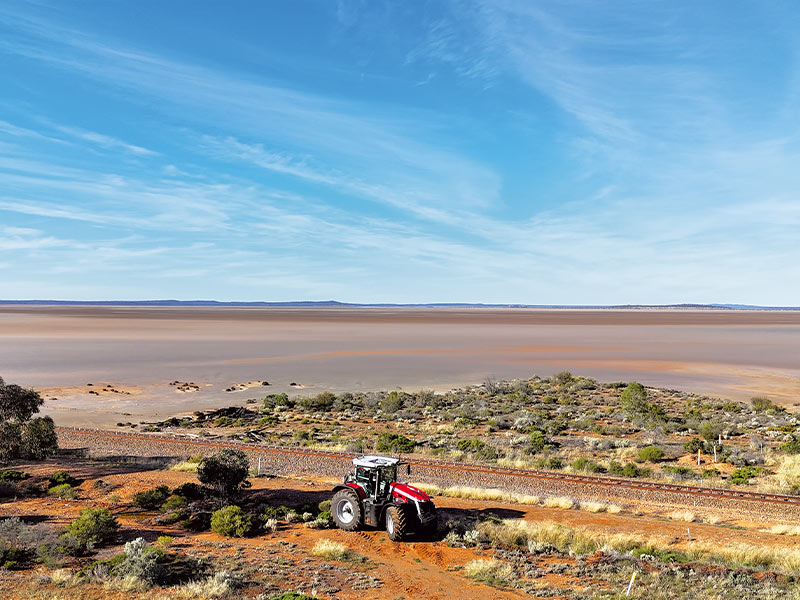
This brings us to the most exciting realization of our 2500km trek. As you drive through the sweeping agricultural belts of Western Australia, particularly as you traverse the stunning country north of Perth, then again between Esperance, Albany, and the south-west, you are surrounded by oceans of, glorious yellow fields of Canola.
Not only is Western Australia one of the world’s premier exporters of canola, historically, 80 percent of this golden crop is shipped offshore as raw seed, only to be processed elsewhere, ironically into feedstock for… you guessed it… renewable fuels.
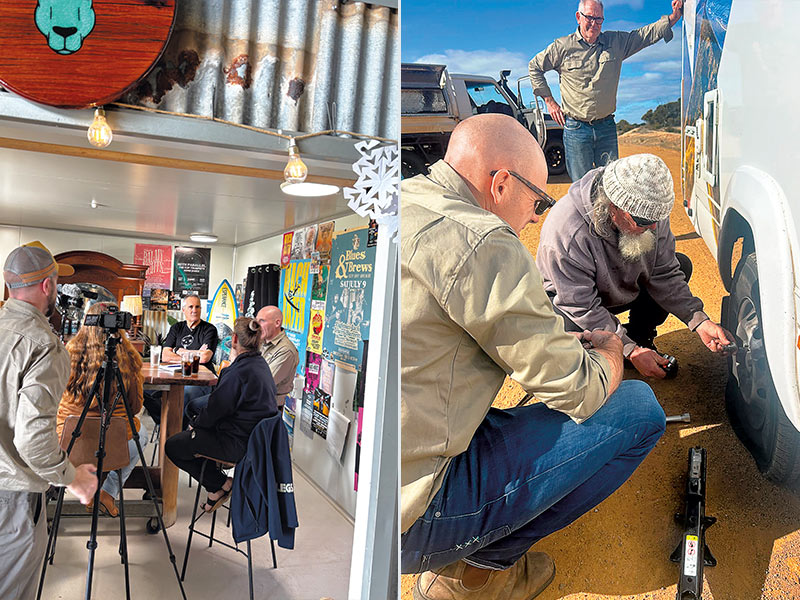
Right: Our mate Skii came to our rescue
The feedstock potential sitting in WA for renewable diesel production is staggering. By crushing local canola to produce vegetable oil for hydrotreated vegetable oil (HVO) and biodiesel refineries right on home soil, Australian agriculture could achieve fuel sovereignty – not completely, but certainly a step in the right direction.
Imagine a closed-loop system:
- WA farmers grow the canola
- The oil is processed locally into renewable diesel
- That same renewable diesel powers the tractors (like our MF 9S) cultivating, seeding, and harvesting the very next crop
- It keeps fuel dollars within the local economy, insulates growers from global shipping shocks and fossil fuel price spikes, and turns the agricultural sector into a net-zero powerhouse.
The Verdict
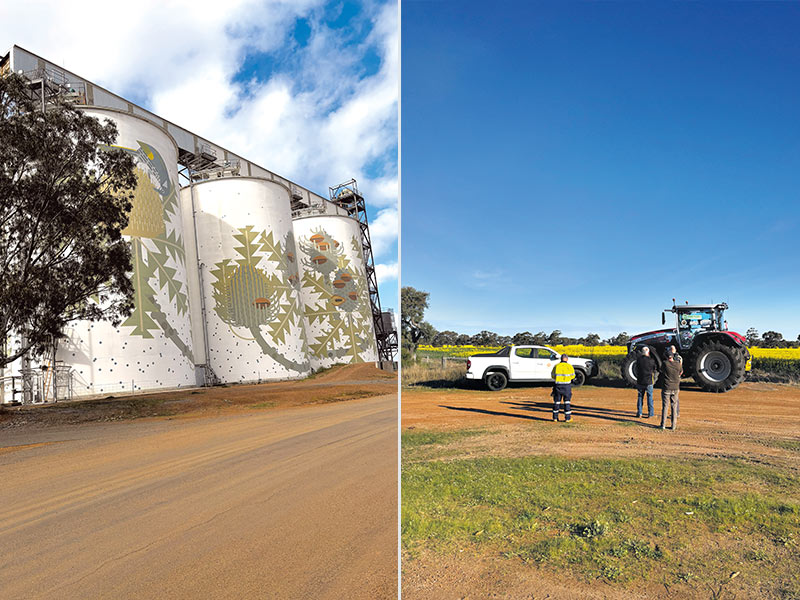
Right: The film crew getting the shot with feed stock in the background
Our 2500km journey across Western Australia proved two things.
First, the Massey Ferguson 9S.425 is an absolute titan of a tractor – combining luxury, intelligent technology, and brute force in a package that makes long-haul outback driving a genuine pleasure.
Second, the technology to decarbonise heavy farming is already here. We don’t need to wait for pipe-dream tech.
With an abundance of homegrown canola rolling across the Western Australian landscape, the ingredients for energy independence are literally growing in the paddocks right beside us.
It’s time to lean into local renewables, back the grain growers, back the golden yellow flowers – an interesting industrial journey we will no doubt look on with keen anticipation from here in New Zealand – but jeepers, I can really get on board with the fish and chips part I tell you what!
